
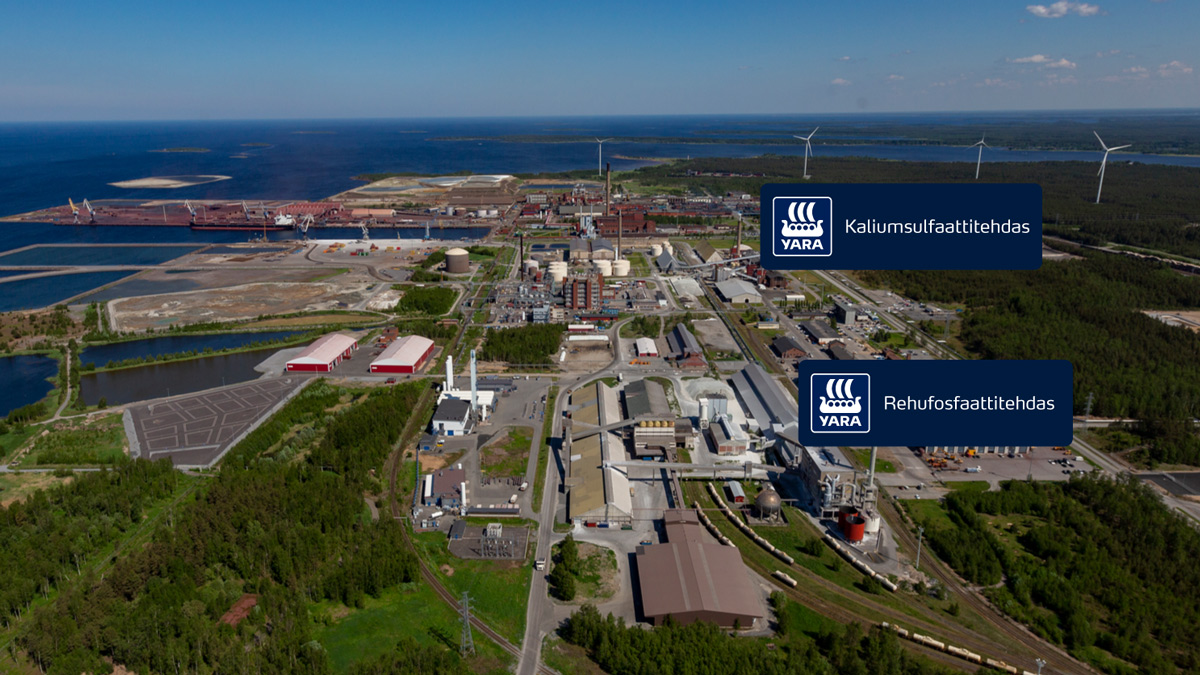
Yara’s Kokkola plants in the KIP area – all 16 furnaces at the potassium sulphate plant now run on natural gas, after the last furnace was converted to natural gas in June 2026. The feed phosphate plant also runs entirely on natural gas.
Yara Kokkola has taken a significant step toward lower-emission, more sustainable production by switching from heavy fuel oil to liquefied natural gas (LNG). The investment is a key part of Yara’s long-term work to reduce its carbon footprint and improve energy efficiency.
The shift to LNG
Yara operates two plants in Kokkola, located in the southern part of KIP, and the transition has been pursued systematically at both. At the feed phosphate plant, production now runs entirely on LNG. At the potassium sulphate plant, all 16 furnaces have now been converted to LNG, with the last furnace switched over in June 2026.
Energy in numbers
Total fuel-based energy use across Yara Kokkola’s plants is approximately 170 GWh per year.
Of this, the feed phosphate plant accounts for around 54 GWh per year, with production based on a maximum output of 13 MW. The burner’s adjustable range allows flexible operation across different production conditions. The plant undergoes a 2–3 week shutdown annually, along with necessary product changeovers.
At the potassium sulphate plant, energy demand is around 120 GWh per year at maximum, with a peak output of 16 MW. Production is maintained using 32 burners, and the plant operates mainly continuously, 24/7. Larger shutdowns occur roughly every five years.
Emission impacts
The shift to LNG significantly reduces local emissions, such as sulphur and particulate emissions, while supporting more energy-efficient production. Compared to heavy fuel oil, liquefied natural gas cuts carbon dioxide emissions by around 25%, sulphur oxide emissions by up to 99%, nitrogen oxides by around 80%, and fine particulate emissions by 99%. The reduction in carbon dioxide emissions exceeds 12,000 tonnes per year, equivalent to the average annual emissions of around 6,000 combustion-engine passenger cars.
The change improves the manageability of production and supports Yara’s goal of developing its operations in a more environmentally sustainable direction. In the future, LNG could be gradually replaced with biogas or synthetic gases, enabling further emission reductions.
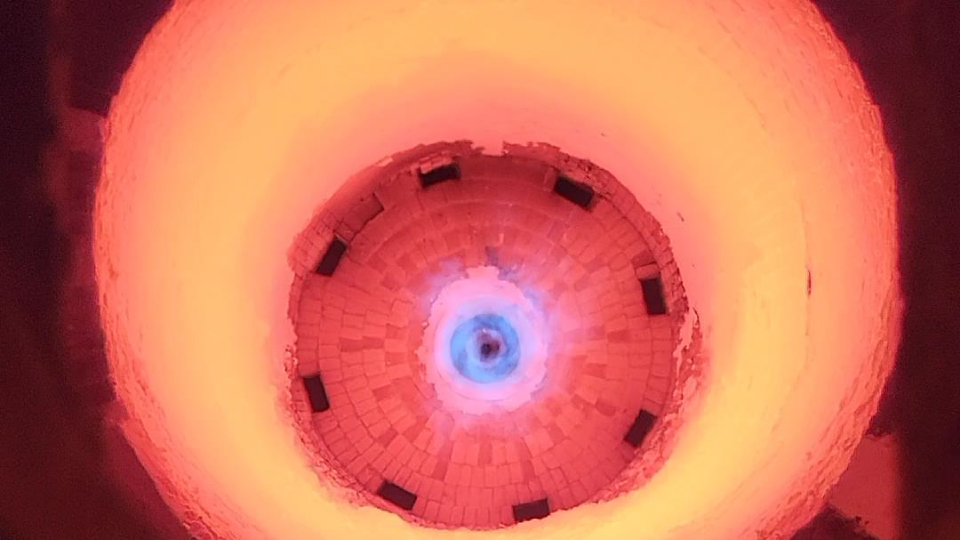
Liquefied natural gas in action at the feed phosphate plant’s burner.