
History
History of the area
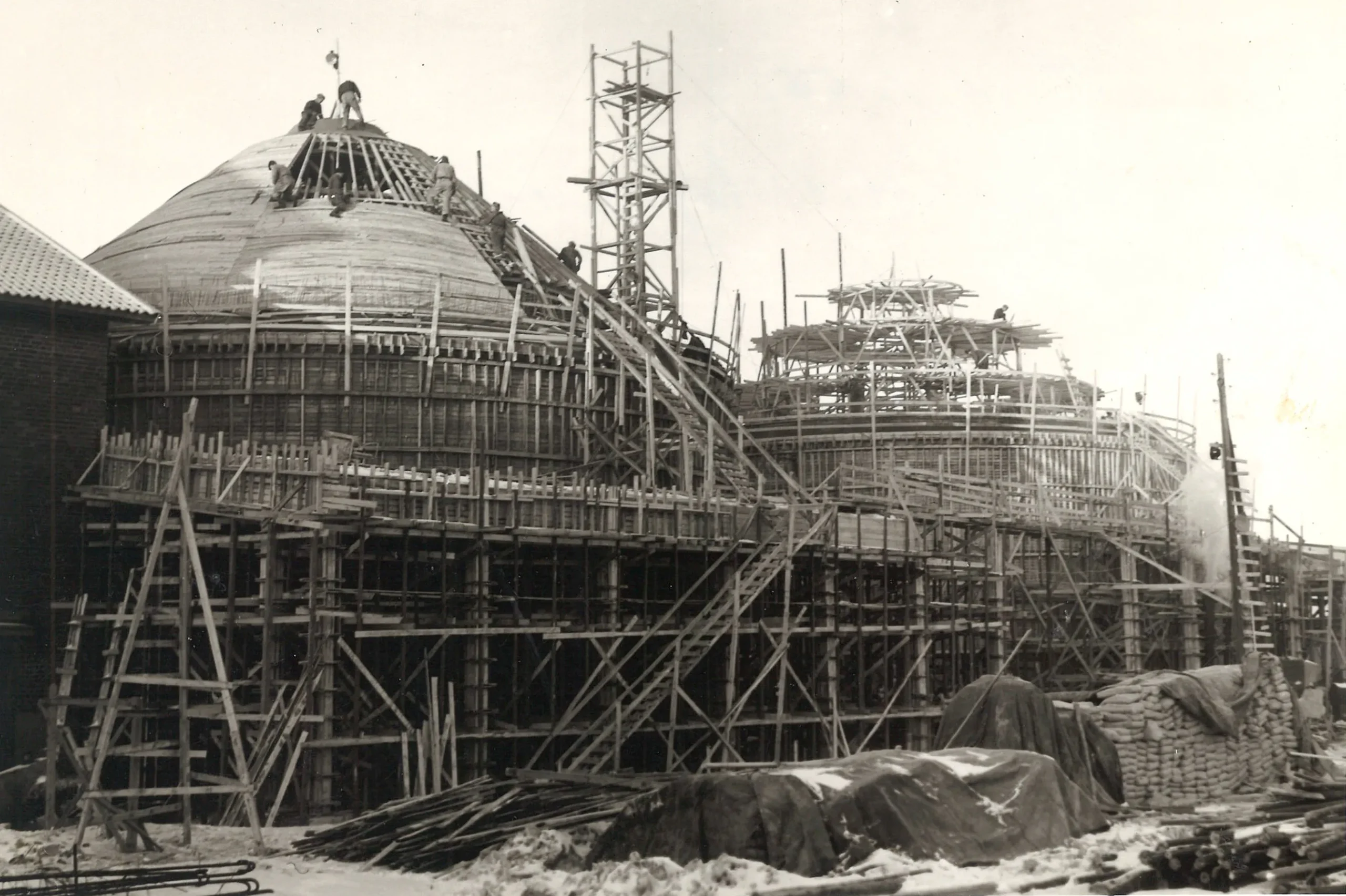
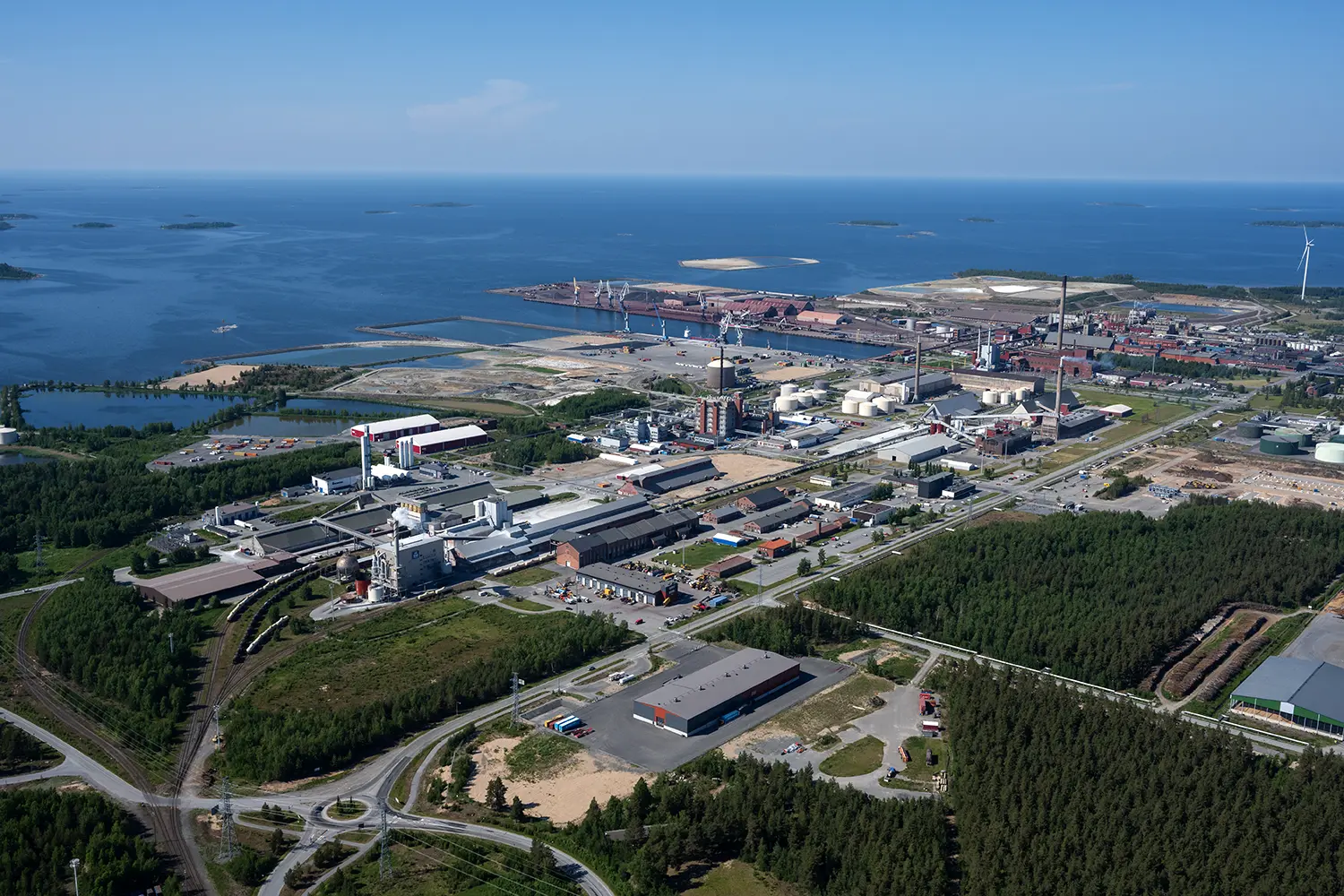
Kokkola has always been a city of trade, shipping, and maritime activity. Shipbuilding and tar export were important livelihoods from the 1500s to the 1800s. Since the early 1940s, Kokkola’s large-scale industrial area has developed from an industrial zone formed by two Finnish state-owned companies into a strong chemical industry park, which today comprises over 70 companies employing a total of 2,400 people.
Kokkola's location
Kokkola owes the establishment of its major industrial area to its location on Finland’s west coast. During World War II, the main line of state industrial policy was to place key industrial plants on the west coast, as far as possible from the Soviet border. For this reason, the state-owned company Rikkihappo Oy founded a sulfuric acid plant and a superphosphate plant near the Port of Kokkola in 1945. Rikkihappo changed its name to Kemira in 1971, and until the 1990s, the company built several new plants in the area, the latest being a feed phosphate plant in 1994.
The Kemira and Outokumpu Era
The southern part of the industrial area is still colloquially called the Kemira area (now KIP South), even though Kemira no longer operates in Kokkola. Similarly, the northern part (now KIP North) is still referred to as the Outokumpu area, after the other state-owned company that built a sulfur plant in Kokkola in 1962. The sulfur plant was closely linked to the Pyhäsalmi mine, established 170 km away in 1962. Key factors in choosing the plant’s location included good connections to the mine, proximity to the port, and the need to place the sulfuric acid plant alongside a new metallurgical production facility, as a large amount of pyrite concentrate from mining required further processing. Rikkihappo Oy’s facilities in Kokkola provided exactly that.
Outokumpu and Finnish industrial policy
After the war, Outokumpu was primarily a mining company, but Finland’s industrial policy strategy included refining metals mined in Finland domestically. Therefore, Outokumpu established metallurgical plants in several coastal towns. In Kokkola, a cobalt plant was founded in 1967 and a zinc plant in 1969. In the 1990s, the Finnish state decided to reduce its industrial ownership, which later affected Kemira, Outokumpu, and the Kokkola industrial area. Over time, Kemira and Outokumpu evolved into truly global, market-driven export companies.
Changes at Kemira
Kemira has completely divested its fertilizer production:
- in 2004, it sold Europe’s largest calcium chloride plant to Tetra Chemicals Europe
- in 2007, fertilizer manufacturer Kemira GrowHow to Norwegian-owned Yara
- in 2010, Kemira ended all industrial production in Kokkola when the sulfuric acid plant was sold to Boliden.
Today, Outokumpu produces only stainless steel and no longer operates in Kokkola. Boliden Kokkola continues Outokumpu’s zinc production, while Umicore and Jervois continue cobalt production.
Present-day industrial area
Although almost all production activities in the area are now controlled by multinational companies, not a single plant has been closed – on the contrary, new owners have made significant investments in the industrial area.
Source: Building Export Finland, Ostrobothnia Chamber of Commerce
Historical photographs: Kemira Archive / Kokkola Local Heritage Archive.